How AI and Machine Learning Are Improving Robotic Packaging
Can Robots Be Better?
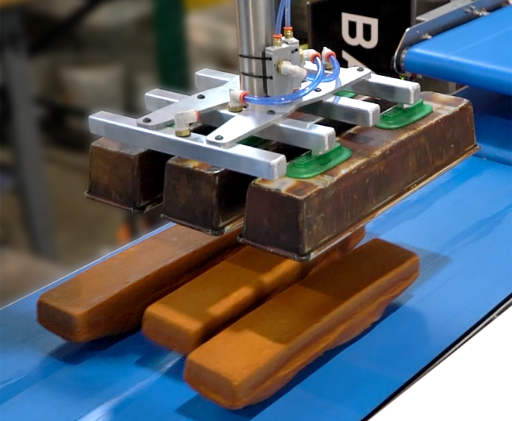
Machine learning and artificial intelligence are making robotic packaging and product handling faster, more accurate, and easier to reconfigure — a shift that's now reaching mid-sized wholesale bakery manufacturers, not just large-scale operations. By pairing standard robotics with AI-driven vision, motion control, and predictive maintenance, manufacturers are able to handle more product variation, reduce waste, and cut unplanned downtime without a full line overhaul.
 7 Ways AI Is Improving Robotic Packaging
1. Improved Product Recognition and Handling
AI-powered vision systems let robots identify products of different shapes, sizes, colors, and positions — even randomly oriented or partially overlapping on a conveyor. This gives manufacturers flexibility to handle naturally variable items like cookies, pastries, and muffins, and machine learning models continuously improve detection accuracy over time, reducing pick-and-place errors.
2. Adaptive Motion Control and Precision
AI-driven path optimization lets robots dynamically adjust movement patterns based on product type, weight, or placement — optimizing handling for fragile or irregular items while minimizing damage from inaccurate handling.
3. Quality Assurance and Inspection
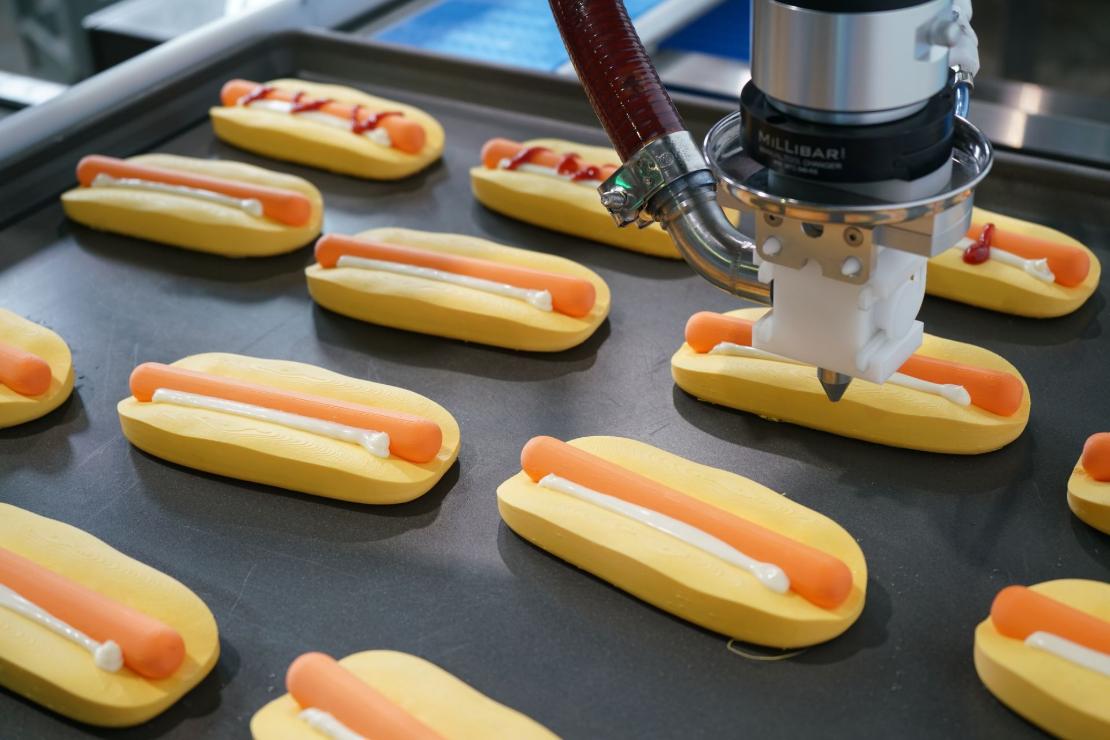
Vision systems paired with AI can detect defects and inconsistencies — missing toppings, uneven cake layers & edges, or packaging misalignment, and trigger real-time rejection or adjustment, improving product quality and reducing waste.
4. Predictive Maintenance and Operational Efficiency
AI algorithms monitor machine behavior and sensor data to flag potential component wear before failure, enabling proactive maintenance that reduces unplanned downtime and extends equipment lifespan.
5. Intelligent Packaging and Customization
AI models let robots adapt to changing packaging formats or sizes without reprogramming — a real advantage for seasonal products or private-label runs that need fast changeovers with minimal manual intervention.
6. Enhanced Safety and Collaboration
AI helps collaborative robots (cobots) predict and respond to human movement in shared workspaces, enabling closer, safer human-robot collaboration in compact bakery production environments.
7. Real-Time Data Integration and Feedback
Machine learning models process data from sensors, cameras, and ERP systems to adjust production parameters in real time, while intelligent alerts and dashboards help operators make faster decisions.
What Makes Modern Robots and Cobots Easier to Adapt?
Overall robotics and cobots are being designed with several key features to increase versatility and improve their ability to adapt to new products.
The combination of modularity, software, 3D sensor integration, and adaptable tooling is making robotics and cobots more versatile and easier to reconfigure for evolving manufacturing demands.
-
Modular Hardware and End-Effectors: Enables quick reconfiguration for new tasks or products, minimal downtime.
-
Advanced Software and Programming: Enables teach pendants, offline programming, and AI-assisted auto-programming for faster changeovers.
-
Sensor Integration and Machine Learning: Enables new objects to be recognized and adapts to variation with minimal reconfiguration.
-
Flexibility in Motion and Path Planning: Enables dynamic adjustments to changes in product shape, size, or orientation.
-
Collaborative Design: Enables cobots to work safely alongside staff without extensive safety barriers, speeding onboarding
.
-
Universal Grippers: Enables end-effectors to adapt and handle multiple product types without swapping tools
-
AI and Machine Learning Integration: Enables robots to learn from experience, reducing setup time for new products
Frequently Asked Questions About AI
-
How does AI improve robotic packaging in bakery production?
AI improves robotic packaging through vision-guided product recognition, adaptive motion control, real-time defect inspection, predictive maintenance, and the ability to adjust to new packaging formats without reprogramming — making automation more flexible for the natural variation found in baked goods. -
Can AI-powered robots handle products that vary in shape or size?
Yes. AI-powered vision systems allow robots to identify products of varying shapes, sizes, colors, and positions — including items that are randomly oriented or partially overlapping — which is especially useful for naturally variable products like cookies, pastries, and muffins. -
Does adding AI to robotic packaging require replacing existing equipment?
Not necessarily. Modular hardware, interchangeable end-effectors, and AI-assisted programming allow many robotic systems to be reconfigured for new products or tasks without a full equipment replacement. -
Is AI-driven robotic packaging accessible to mid-sized wholesale bakeries, or only large manufacturers?
AI-driven automation has become more accessible, cost-effective, and scalable in recent years, extending it to mid-sized wholesale bakery manufacturers rather than only large-scale operations. -
What is predictive maintenance in robotic packaging?
Predictive maintenance uses AI algorithms to monitor machine behavior and sensor data to flag potential component wear or failure before it happens, allowing proactive maintenance that reduces unplanned downtime versus fixed maintenance schedules.